P.S.H.E
Mission Statement
“With Jesus as our guide and walking by our side,
we learn to love and love to learn.”
Vision Statement
At St Cecilia’s Catholic Primary School we are committed, through challenging and stimulating PSHE lessons, to allowing our children to realise their potential and have high expectations; equipping them for their future and creating understanding citizens of the world. Our carefully planned PSHE curriculum helps children to understand themselves and the world around them, to learn about healthy relationships, how to be responsible and understanding citizens and keep themselves and others safe. We equip our children with an awareness of different factors that may affect their lives and their choices, enabling them to deal with those; resulting in good mental health and well-being. Our lessons encompass PSHE, RSHE and RSE. We enable our pupils to acquire knowledge, skills and attitudes whilst working both independently and collaboratively to become successful, confident and resilient members of society so that they can thrive, now and in the future.
St Cecilia's PSHE/RSHE including:RSE & Digital wellbeing.
PSHE Scheme of Work
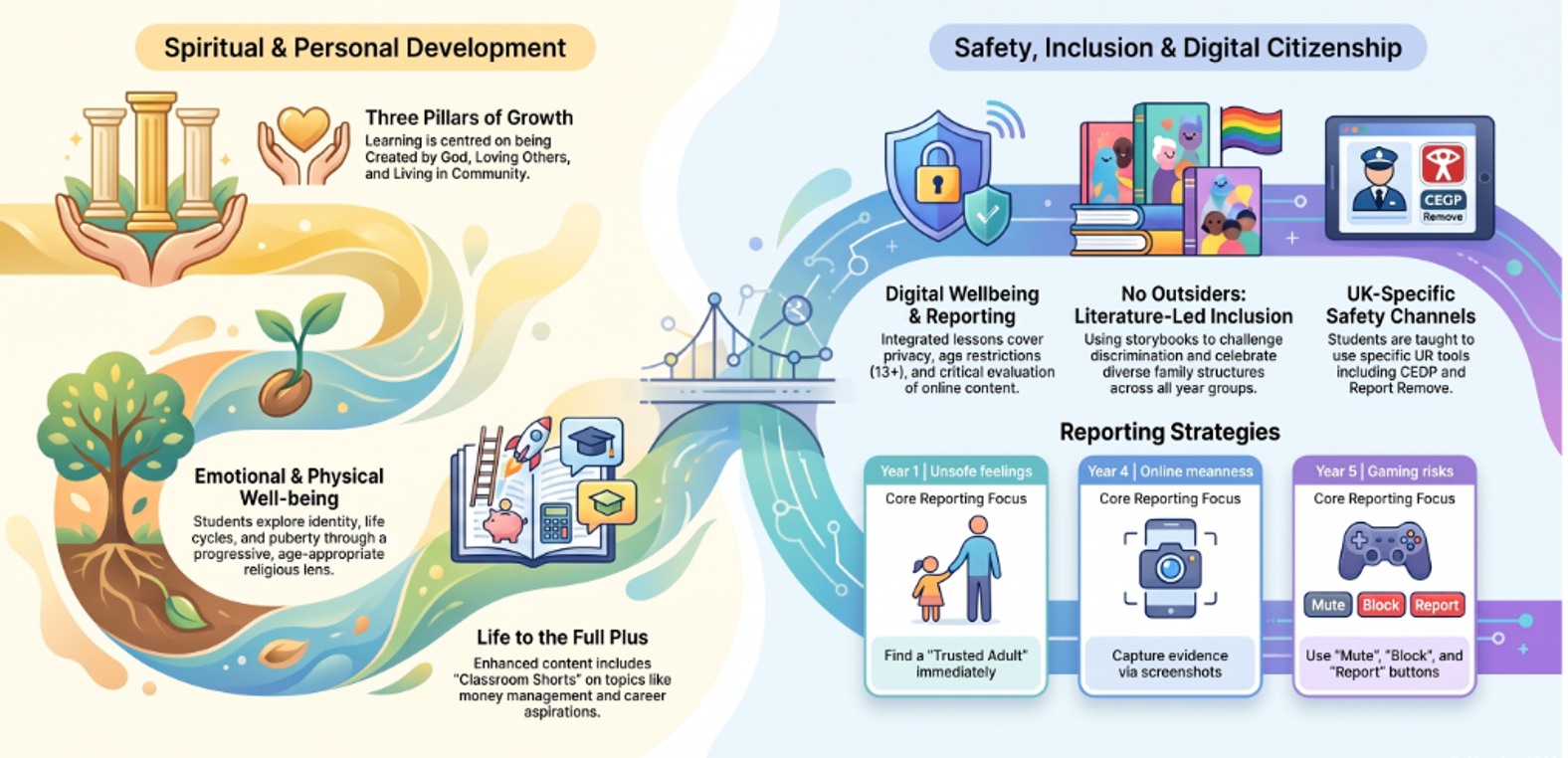
St Cecilia's follows The Ten:Ten Resources programme, titled Life to the Full Plus, provides a comprehensive curriculum framework for 2026 designed to support students from Early Years (EYFS) through Upper Key Stage 2. The syllabus is elegantly structured into three core modules that explore being created by God, loving others, and living in community, ensuring a consistent spiritual foundation across all ages. Within these modules, specific units address a diverse range of modern physical and social topics, including personal health, emotional well-being, digital safety, and life cycles. By integrating religious understanding with practical life skills and "Classroom Shorts," the programme aims to foster a holistic development of the child within a faith-based context.
To ensure consistent delivery, school-wide thematic cohesion, all year groups cover the same overarching modules simultaneously:
Autumn Term: Module 1 – Created and Loved by God (Health & Wellbeing / Body / Life Cycles)
Spring Term: Module 2 – Created to Love Others (Personal Relationships / Keeping Safe / Online Safety)
Summer Term: Module 3 – Created to Live in Community (Living in the Wider World / Diversity & Inclusivity)
Themes taught across the year (age-appropriately) include:
- Families and People Who Care For Me
- Caring Friendships
- Respectful, Kind Relationships and Being Safe
- General Wellbeing
- Digital Well-being (taught through the scheme and our computing curriculum)
- Physical Health and Fitness
- Drugs, Alcohol, Smoking and Vaping
- Basic First Aid
- Developing Bodies
Where natural links allow, RSHE/PSHE is also taught through other subjects, such as PE, Computing, History and English. This is to increase the our children's understanding and to develop a "real life" approach to the development of the "whole child".
PSHE is taught by class teachers, through discreet lessons, circle time and through other subjects. At some point in the year, each class will also receive RSHE sessions from Miss Quigley, who will also deliver curriculum content. Sometimes, we are lucky enough to have outside speakers in our school assemblies to talk to us about issues which they wish to raise awareness of. This wide range of PSHE opportunities helps our children to develop into well-rounded, responsible individuals.
No Outsiders- is used to teach children equality, diversity and protected characteristics
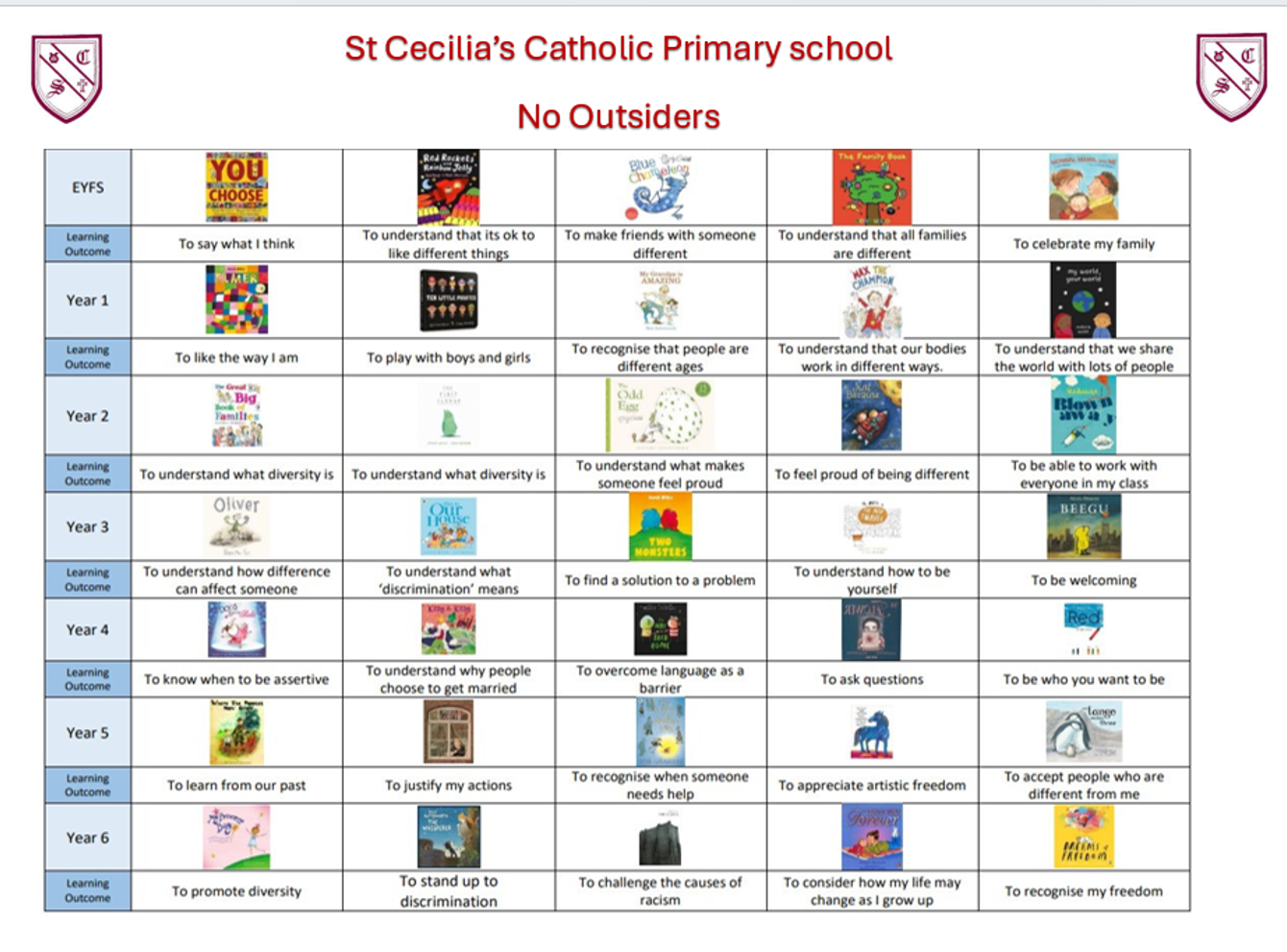
The No Outsiders programme at St Cecilia’s Catholic Primary School is structured as a whole-school plan that uses age-appropriate children's literature to teach five specific learning outcomes per year group. These outcomes focus on diversity, inclusion, and the Equality Act, progressing from basic self-acceptance in the early years to active social advocacy by Year 6.
The following is a detailed breakdown of the learning outcomes by year group:
|
Foundation Stage (EYFS) The focus is on establishing a sense of self and an early appreciation for differences in others.
|
|
|
Key Stage 1 (Years 1 & 2) Students begin to explore physical differences, different family structures, and the concept of diversity.
|
|
|
Year 2:
|
Upper Key Stage 2 (Years 5 & 6) The final years focus on historical context, justifying moral actions, and actively challenging prejudice.
|
|
Lower Key Stage 2 (Years 3 & 4) The curriculum moves toward understanding the impact of difference and the vocabulary of equality.
|
|
RSE- 'Journey in Love'
For RSE, we follow 'Journey in Love Scheme' for Sex Education, which is the recommended programme for Catholic Schools by CES.
Gridmaker is a programme we use to capture the elements of R.S.H.E programme of study, S.M.S.C and British Values that can't be seen in books or lessons. These are some screen shots of how the data has been recorded and collated.


